
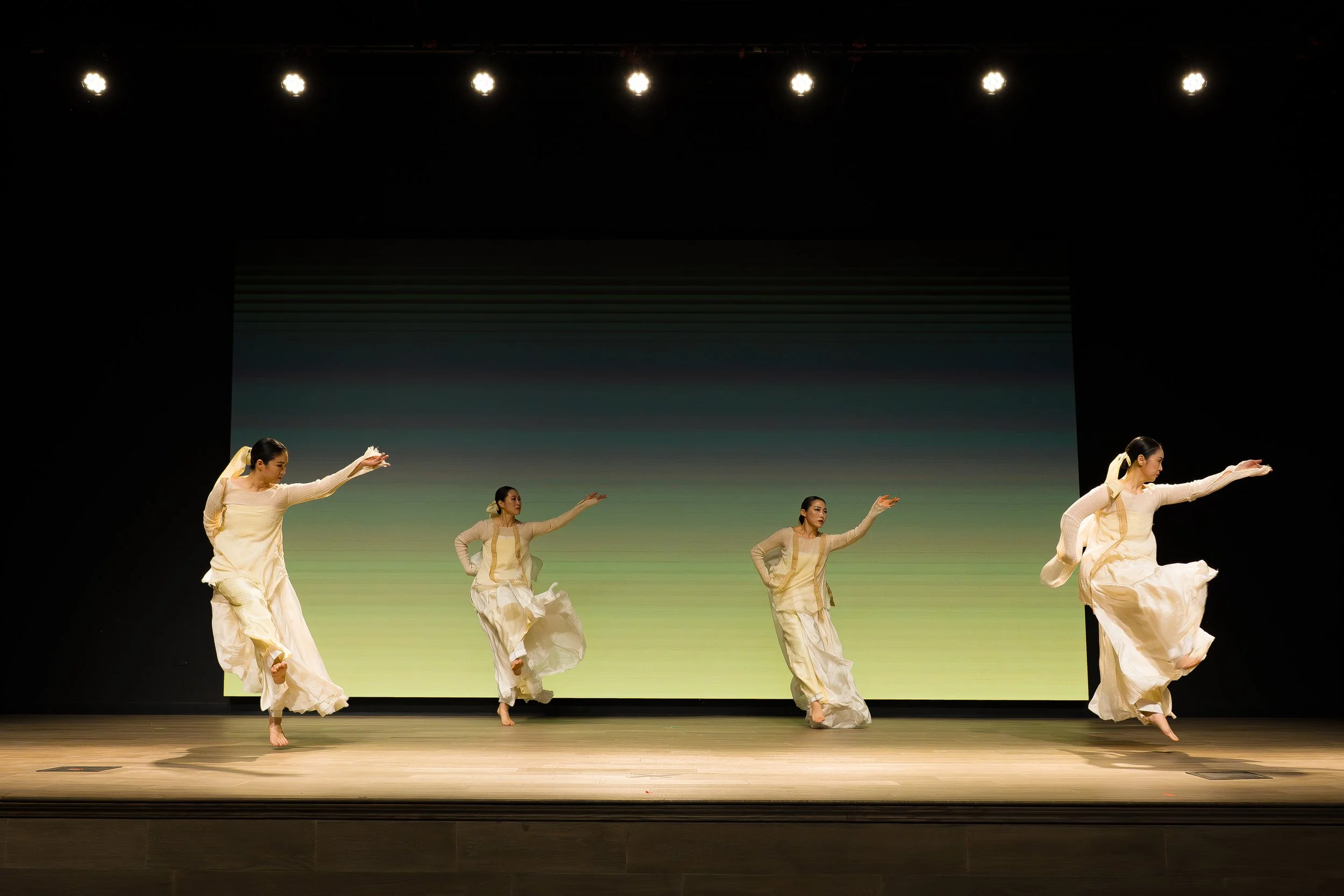
Dance Across Time
Founded in 2009, Chicago Korean Dance Company rebranded this year as Chicago Korean Dance and presented its first seasonal performance, “Dancing Across Time,” on March 8 at Visco Hall in the Korean Cultural Center of Chicago.
Selected for the Visco Performing Arts Series, this performance differed from the company’s biennial large-scale productions by offering a more intimate stage setting, allowing for a closer connection with the audience.
Drawing upon its established repertoire, Chicago Korean Dance newly structured the program under the theme of “Traditional Korean Dance and Contemporary Interpretation.”
By pairing traditional works with newly created pieces inspired by them, the performance presented an artistic continuum connecting the past, present, and future.
Artistic Director Aeduk Lee stated,
“The dances we perform today may one day become traditions themselves. This performance presents the direction and vision of the newly rebranded Chicago Korean Dance.”
2009년 창단한 시카고한국무용단이 올해 ‘시카고코리안댄스’로 새롭게 리브랜딩하고 시즌 첫 공연 ‘춤, 시간을 건너다’를 8일 시카고한인문화원 비스코홀에서 선보였다.
이번 공연은 비스코 퍼포잉 아츠 시리즈 공모에 선정된 작품으로 격년으로 이어오던 대규모 정기공연과는 달리 보다 인티밋한 무대 구성으로 관객과의 거리를 좁혔다.
시카고코리안댄스는 그간 축적해 온 주요 레퍼토리를 토대로 ‘한국 전통무용과 현대적 재해석’이라는 콘셉트 아래 프로그램을 새롭게 구성했다.
전통의 미학을 충실히 담아낸 작품과 이를 동시대적 감각으로 확장한 창작 작품을 ‘페어(짝)’ 형식으로 배치해 과거와 현재, 나아가 미래를 잇는 예술적 흐름을 무대 위에 구현했다.
이애덕 시카고코리안댄스 단장은 “오늘 우리가 추는 춤 또한 시간이 흐르면 또 하나의 전통이 될 수 있다”며 “이번 공연은 새롭게 출범한 시카고코리안댄스의 방향성과 비전을 선보이는 자리”라고 밝힌 바 있다.
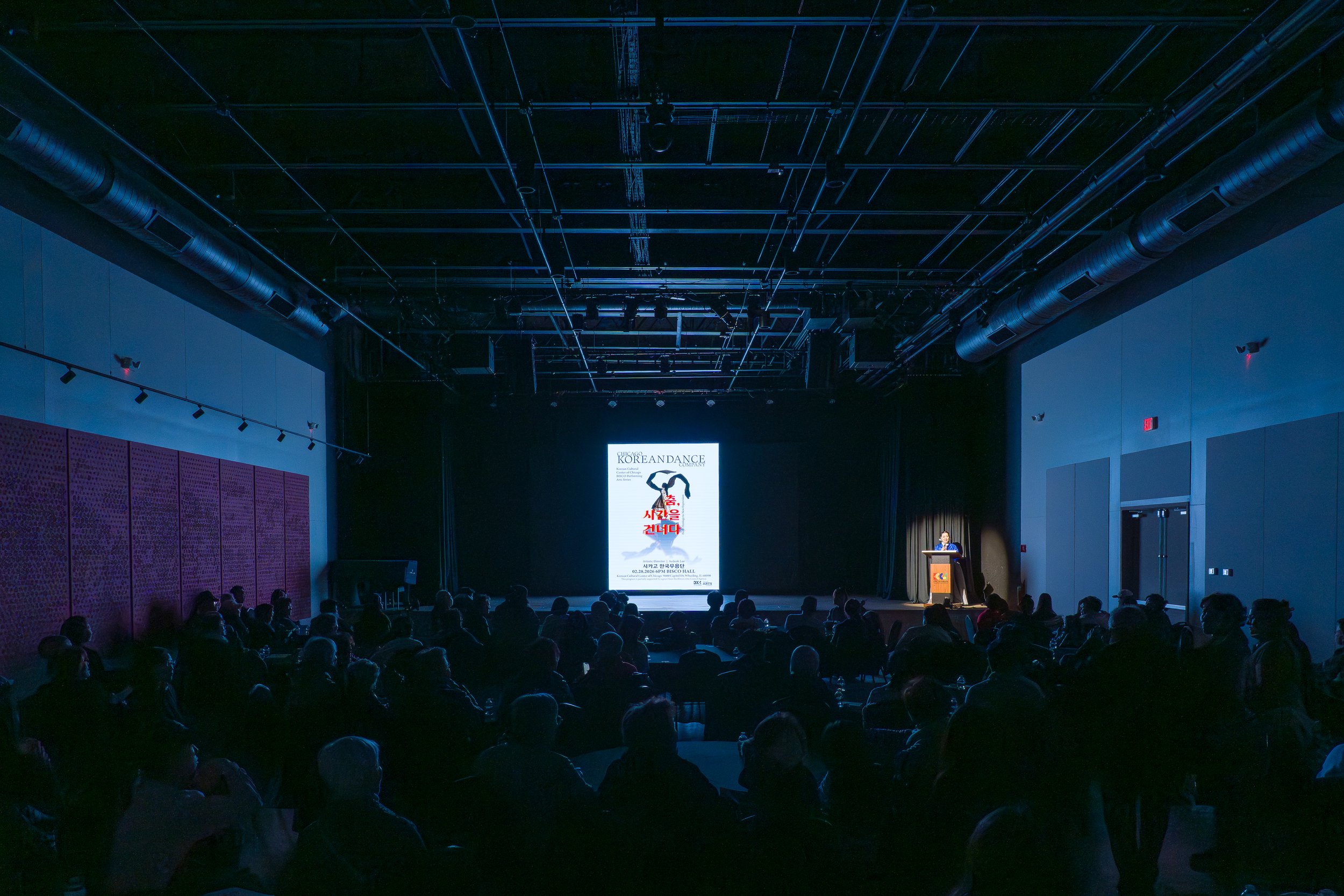
Opening:
Ipchum & “Saebit (New Light)”
The performance opened with Ipchum, a traditional dance with a long history dating back to the late 17th century, followed by the contemporary piece “Saebit (New Light).”
Ipchum is often considered a foundational dance for beginners, characterized by its free structure and expressive movements. Some interpretations suggest its name derives from the practice of vocalizing rhythmic sounds while dancing.
Saebit, choreographed in 2025, reinterprets the aesthetics of Ipchum through a contemporary lens. While Ipchum traditionally begins with the folk song Seongjupuri, Saebit incorporates the modern gayageum composition “Chunseol,” blending traditional sensibilities with a contemporary rhythm.
The piece explored the intersection of tradition and creation, embodying the flow of dance from past to present.
첫 무대는 전통 입춤과 그 뿌리에서 출발한 창작무용 ‘새빛’이다.
입춤은 조선 후기인 17세기 후반(1650년대 이후) 『조선미인도감』에 그 기록이 전해질 만큼 오랜 역사를 지닌 춤이다. 무용을 처음 입문할 때 배우는 기초 춤으로 알려져 있으며, 한편으로는 입으로 구음(口吟)을 내며 춘 데서 그 명칭이 비롯되었다는 설도 있다. 정해진 순서 없이 춤의 시작을 여는 기본 동작으로 자유롭게 추어졌다는 점이 특징이다.
이날 함께 소개된 창작무용 ‘새빛’은 지난해 안무된 작품으로 입춤의 미학을 현대적으로 재해석한 무대였다. 작품은 입춤의 핵심인 ‘자유롭되 절제된 멋’을 바탕으로 이를 한층 부드럽게 확장해 풀어냈다. 전통 입춤이 민요 ‘성주풀이’로 시작되는 형식을 지녔다면 ‘새빛’은 현대 가야금곡 ‘춘설’을 음악으로 삼아 전통의 결을 지키면서도 동시대적 호흡을 더했다.
이처럼 ‘새빛’은 전통과 창작의 접점을 모색하며 과거에서 오늘로 이어지는 춤의 흐름을 무대 위에 담아냈다.
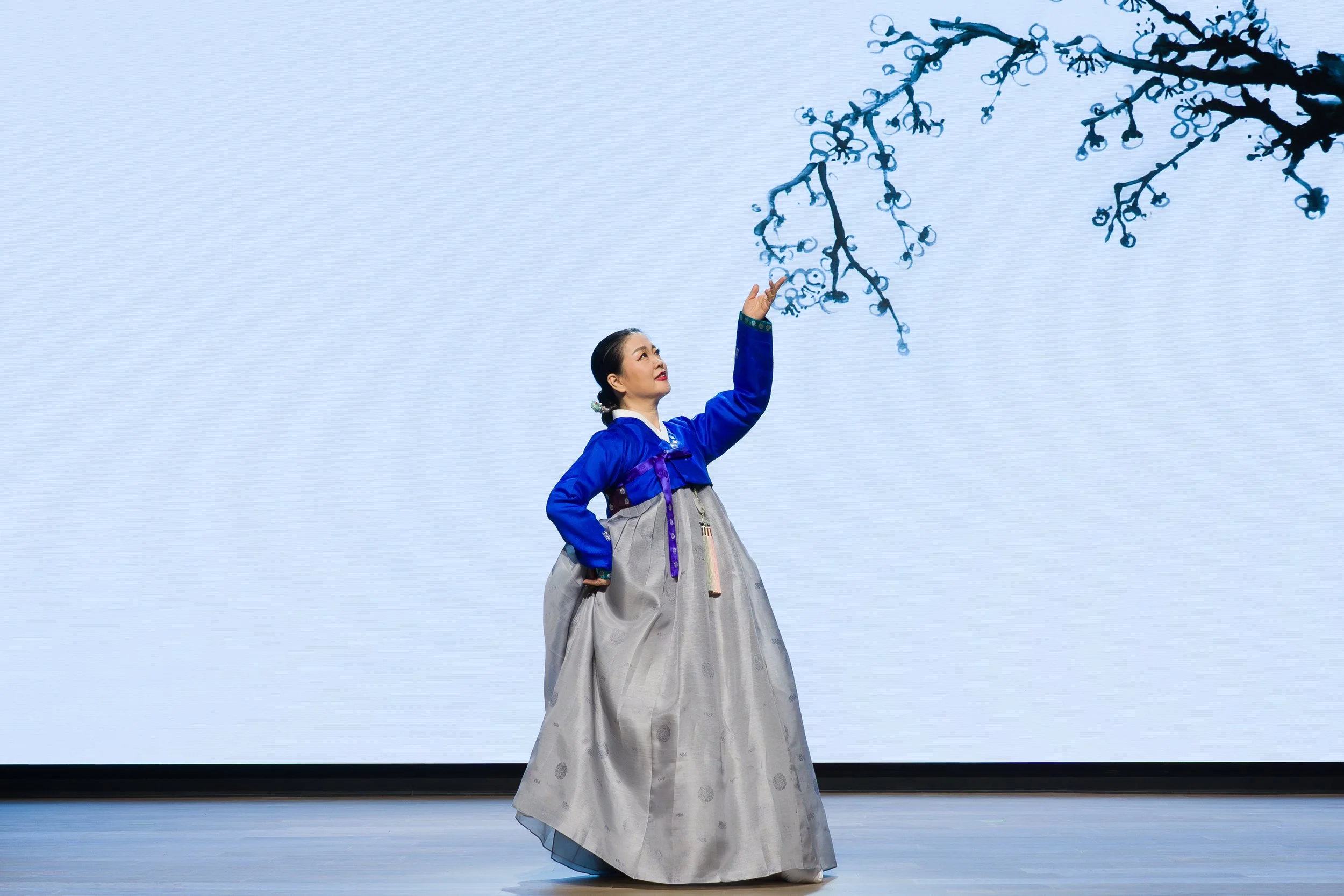
From Ipchum | Dancer: Aedeok Lee
입춤 | 이애덕
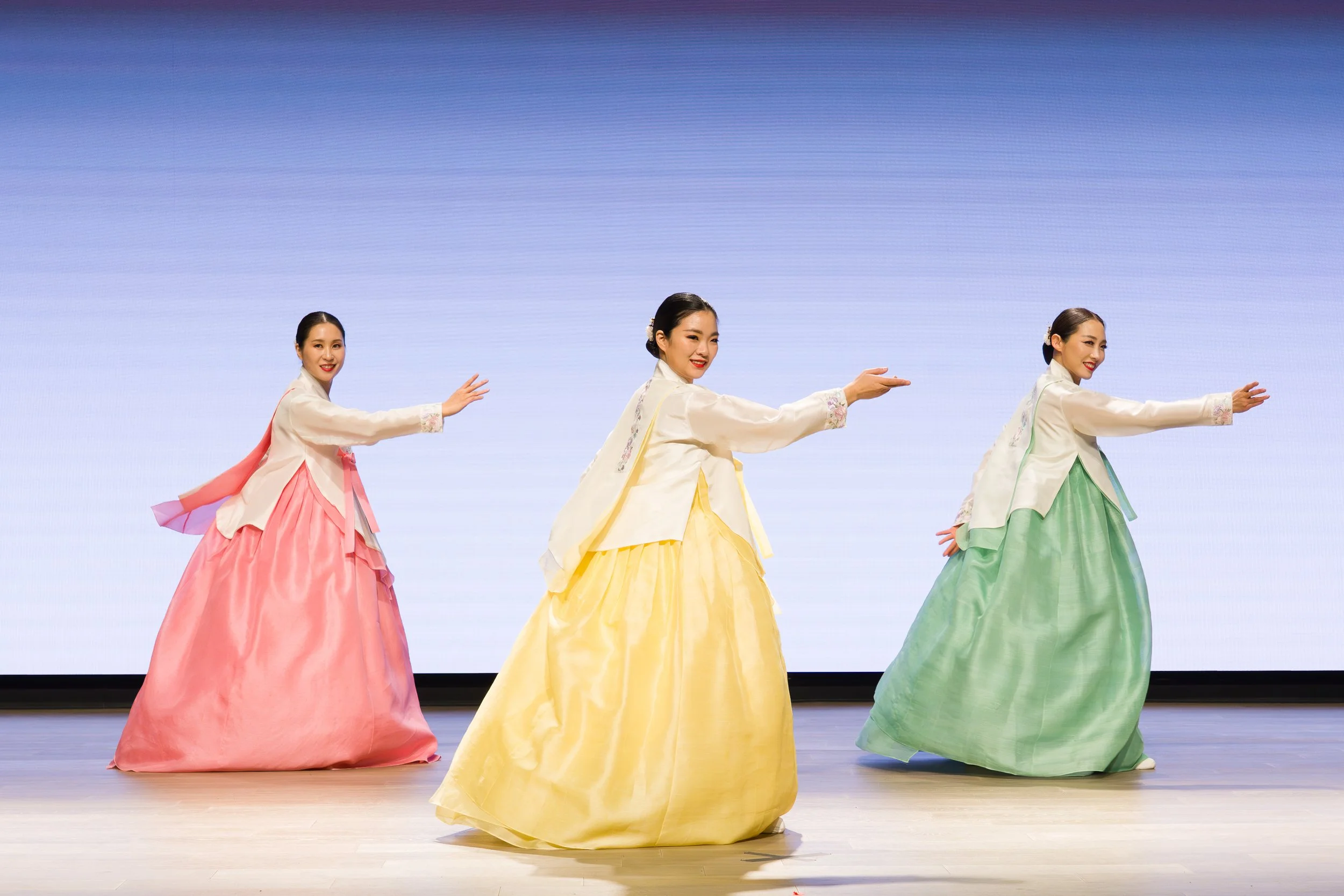
From Saebit (New Light) | Dancers (from left to right): Yanghee Kim , Nancy Cho, Hyunna Lee
새빛 | 김양희, 조서영, 이현나
Salpuri & “A Single Longing”
The second program featured Salpuri, a designated Korean Intangible Cultural Heritage, alongside the contemporary work “A Single Longing.”
Salpuri literally means “to release negative energy,” symbolizing the cleansing of deep sorrow and emotional burdens. The dancer’s use of the white scarf—dropping it to release sorrow and reclaiming it to transform emotion—conveyed a profound inner journey.
Following this, “A Single Longing” (2011) expressed the universal emotion of longing—toward loved ones who are no longer present, whether parents, partners, or friends. The piece delicately brought forward deeply embedded emotions within the human heart.
두 번째로 선보인 작품은 전통 춤 살풀이와 이를 바탕으로 한 창작무용 ‘그리움 하나’.
살풀이춤은 한국의 무형문화재로 지정된 대표적인 전통춤으로 이름 그대로 ‘살(煞)을 푼다’는 의미를 지닌다. 여기서 ‘살’은 마음에 맺힌 나쁜 기운이나 응어리를 뜻하며 이를 ‘푼다’는 행위는 한과 슬픔을 정화하고 해소하는 과정을 상징한다.
무대 위에서 수건을 떨어뜨리는 동작은 억눌린 한을 풀어내는 의미를 담고 있었고 다시 수건을 움켜쥐는 순간에는 그 감정을 승화시키는 상징이 담겨 있었다.
살풀이춤은 화려한 기교를 앞세우기보다는 절제된 움직임과 긴 호흡으로 관객의 마음을 조용히 어루만지는 춤으로 다가왔다.
이러한 정서를 바탕으로 안무된 작품이 살풀이에 이어진 무대 ‘그리움 하나’였다. 2011년에 창작된 이 작품은 우리 각자의 마음속에 자리한 ‘그리움’이라는 보편적 감정을 무대 위로 끌어올리는 기획의도를 담고 있다.
지금은 곁에 없는 부모, 연인, 혹은 친구처럼 삶 속에서 멀어졌지만 깊이 남아 있는 존재들을 떠올리게 하며 마음속 깊은 곳에 잠재된 하나의 감정을 섬세하게 드러내고자 한 작품이었다.
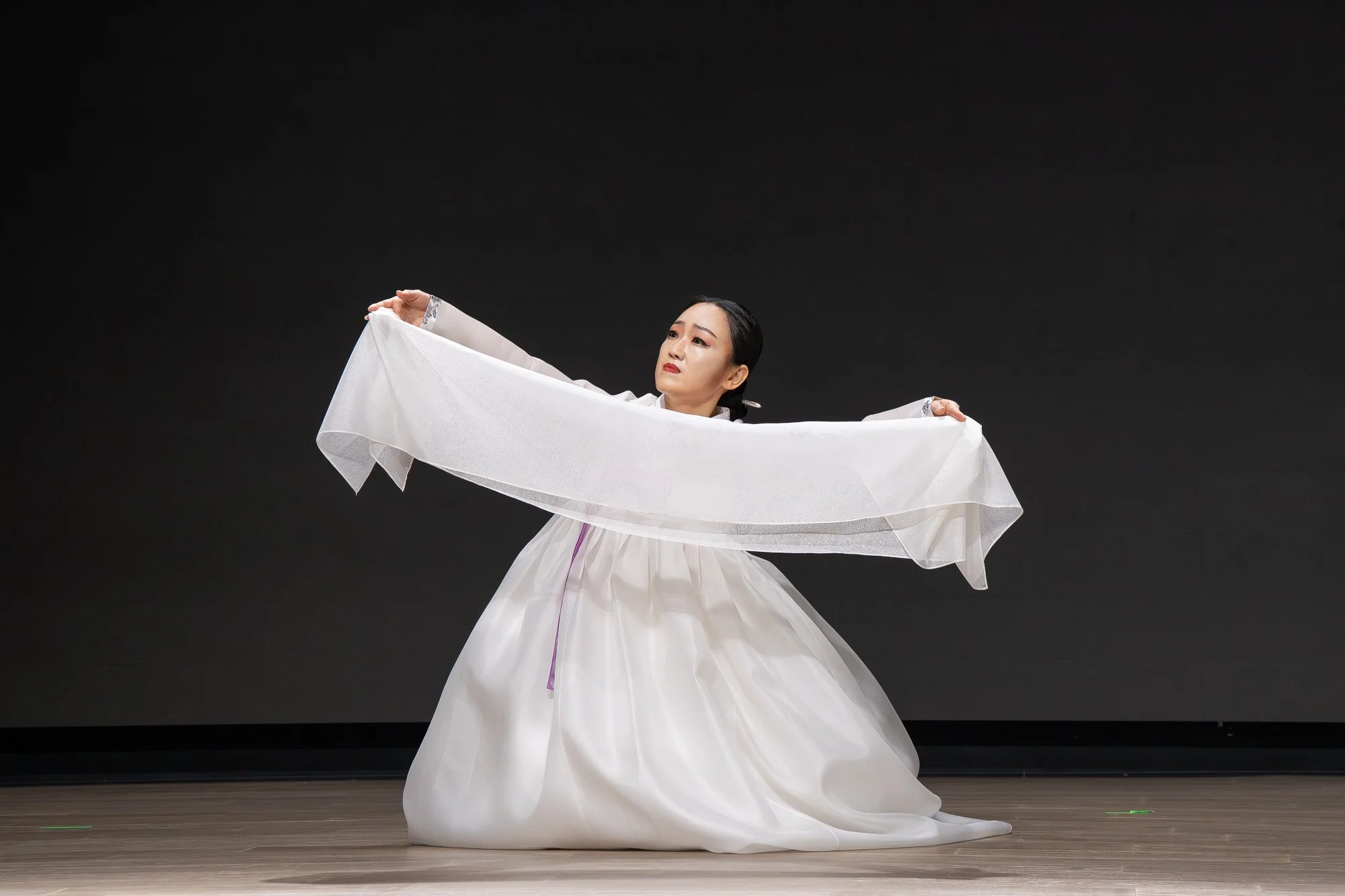
From Salpuri | Dancer: Juyeun Chae (Jiyoung Park)
살풀이 | 채주연 (박지영)
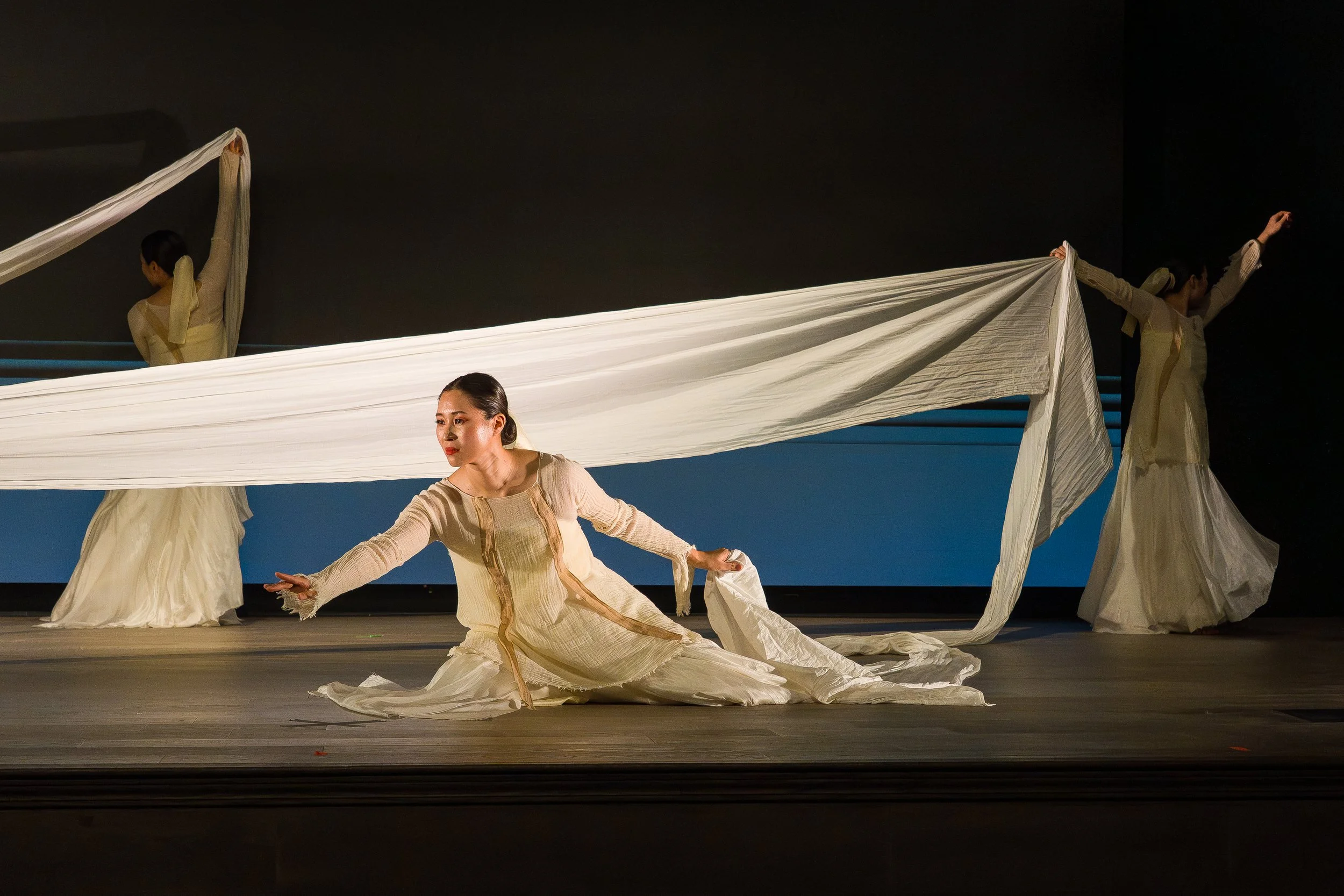
From A Single Longing | Dancer: Allison Kim (Yujin Kim, Hyunna Lee, Nancy Cho)
그리움 하나 | 김양희 (김유진, 이현나, 조서영)
Fan Dance & “The First Path”
The third segment paired the iconic Fan Dance with the contemporary work “The First Path.”
Widely recognized as a representative Korean dance, Fan Dance was first staged in 1954 by choreographer Kim Baek-bong. Though often perceived as traditional, it is in fact a relatively modern creation that has since become a “new tradition.”
“The First Path,” inspired by a poem by Do Jong-hwan, portrayed the emotions of embarking on a new journey—the mixture of excitement, fear, and hope. The piece blended traditional aesthetics with poetic imagery, presenting the meaning of new beginnings.
세 번째 무대에서는 부채춤과 창작무용 ‘처음 가는 길’이 함께 올려졌다.
부채춤은 오늘날 한국을 대표하는 춤으로 널리 알려져 있으며 해외 관객들에게도 큰 사랑을 받아왔다. 그러나 오랜 고전으로 인식되는 것과 달리 이 춤은 한국전쟁 이후인 1954년 처음 솔로 작품으로 무대에 올려졌다. 안무자인 김백봉 선생은 부채춤에 대해 한국적 우아함을 바탕으로 당시의 암울한 시대 현실 속에서도 희망을 표현하고자 한 작품이었다고 밝힌 바 있다.
이처럼 부채춤은 전통의 미학을 담고 있으면서도 비교적 현대에 창작된 ‘새로운 전통’이라 할 수 있었다. 오늘날 창작되는 춤 역시 시간이 흐르면 또 하나의 전통으로 자리매김할 수 있음을 시사하는 대목이었다.
이어 선보인 창작 작품 ‘처음 가는 길’은 도종환 시인의 시에서 영감을 받아 안무되었다. 작품은 처음 길을 나설 때 느끼는 설렘과 두려움, 그 길을 당당히 걸어갈 수 있으리라는 현재의 희망을 움직임으로 형상화하였다.
전통과 현대, 그리고 시적 이미지가 어우러지며 새로운 여정의 의미를 무대 위에 펼쳐 보인 무대였다.
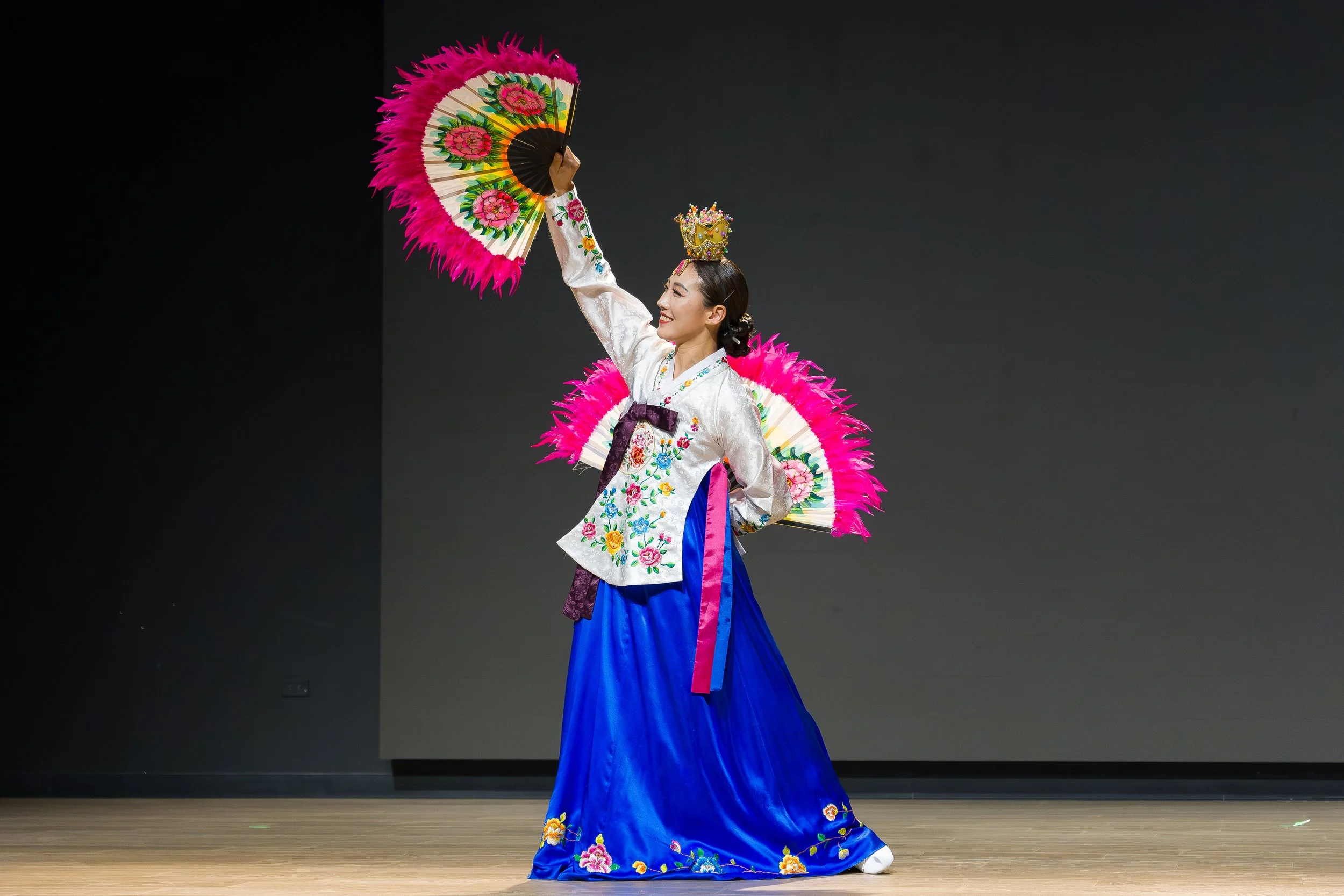
From Fan Dance | Dancer: Hyunna Lee
부채춤 | 이현나
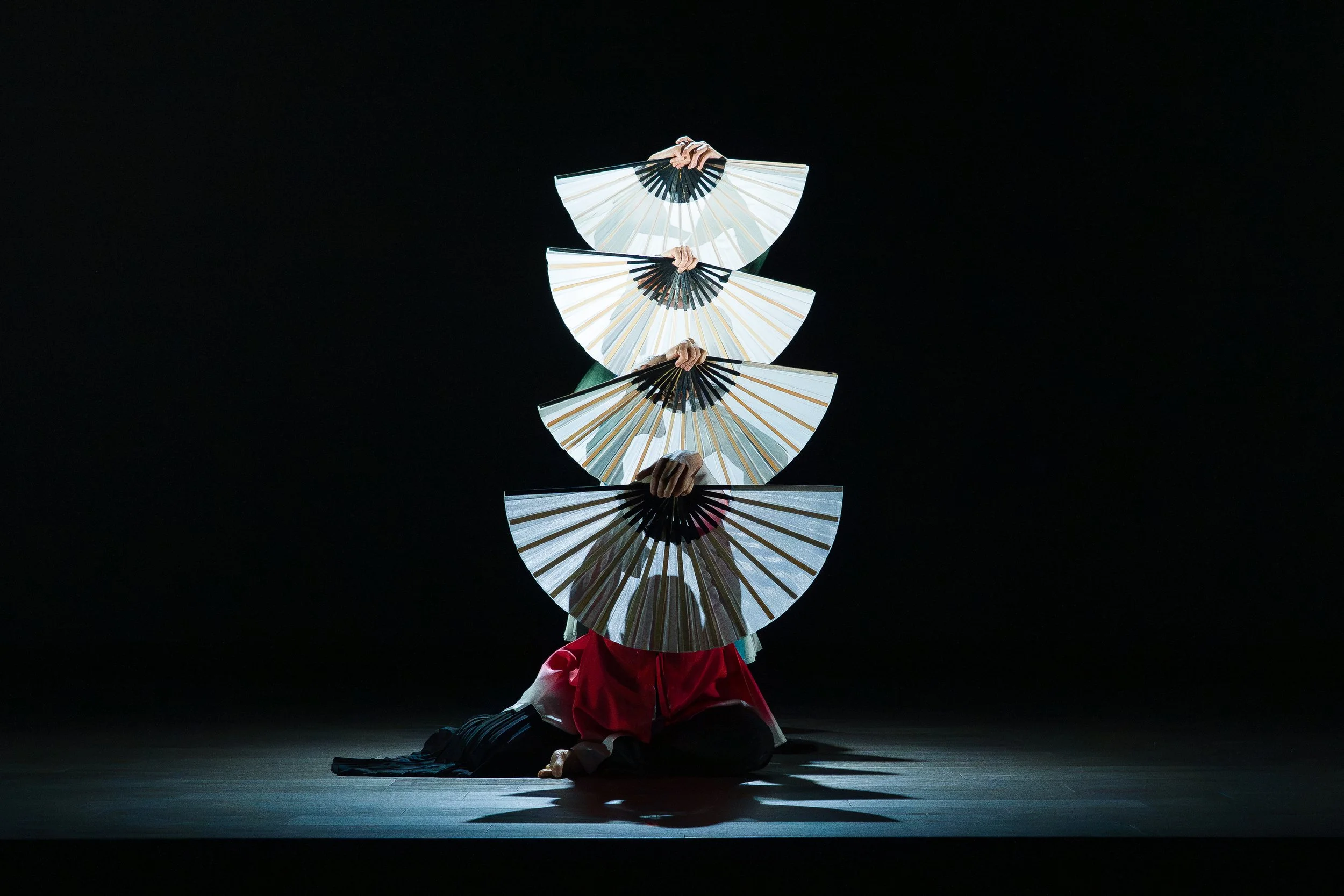
From The First Path | Dancer: Yujin Kim, Jiyoung Park, Hyunna Lee, Nancy Cho
처음가는 길 | 김유진, 박지영, 이현나, 조서영
Seungmu & “Arirang Love Song”
The final program featured Seungmu, a National Intangible Cultural Heritage, followed by “Arirang Love Song.”
Seungmu, known for its long flowing sleeves and drum sequences, expresses a spiritual journey—from inner conflict to tranquility—through restrained movements and deep, controlled breathing.
Building upon this foundation, “Arirang Love Song” expanded the emotional theme of longing introduced earlier in the program. Using the deeply resonant cultural symbol of Arirang, the piece portrayed complex emotions of separation, homesickness, and memory.
A particularly striking moment occurred when the dancers removed their black garments and placed them on the stage—symbolizing the act of letting go and moving forward.
The performance transitioned from introspective reflection to collective emotional resonance, leaving a lasting impression.
마지막 무대는 승무와 창작무용 ‘아리랑 연가’였다.
승무는 국가무형문화재로 지정된 전통춤으로 조선 중기부터 전승되어 온 것으로 알려져 있다. 긴 장삼과 고깔, 그리고 북을 치는 장면 때문에 흔히 종교적 의식무로 오해되기도 하지만 특정 종교 의례에서만 추어지는 춤은 아니다.
승무는 인간 내면을 응시하며 번뇌를 통과해 마침내 고요에 이르는 과정을 상징적으로 풀어내는 작품으로, 절제된 동작과 깊은 호흡 속에 정신적 여정을 담아내는 춤이다.
이 같은 흐름을 바탕으로 창작된 작품이 ‘아리랑 연가’였다. 앞서 선보였던 ‘그리움 하나’의 정서를 확장한 연작의 성격을 지닌 이 작품은 ‘아리랑’이라는 이름만으로도 가슴을 울리는 집단적 기억과 정서를 무대 위에 담아냈다.
고국을 떠날 때 마음속에 맺히는 서러움과 그리움, 그리고 떠나온 이유가 조국 자체일 수도, 가족이나 친구 때문일 수도 있는 복합적인 감정을 섬세하게 풀어냈다.
공연 중 무용수들이 검은 옷을 벗어 무대 위에 내려놓는 장면은 특히 인상적이었다. 이는 더 이상 무거운 짐을 붙들고 있기보다 스스로 내려놓고 앞으로 나아가자는 상징적 메시지를 담은 연출이었다.
승무의 내면적 성찰에서 출발해 ‘아리랑’의 집단적 정서로 확장된 이번 무대는 전통과 창작이 하나의 서사로 이어지며 깊은 여운을 남겼다.
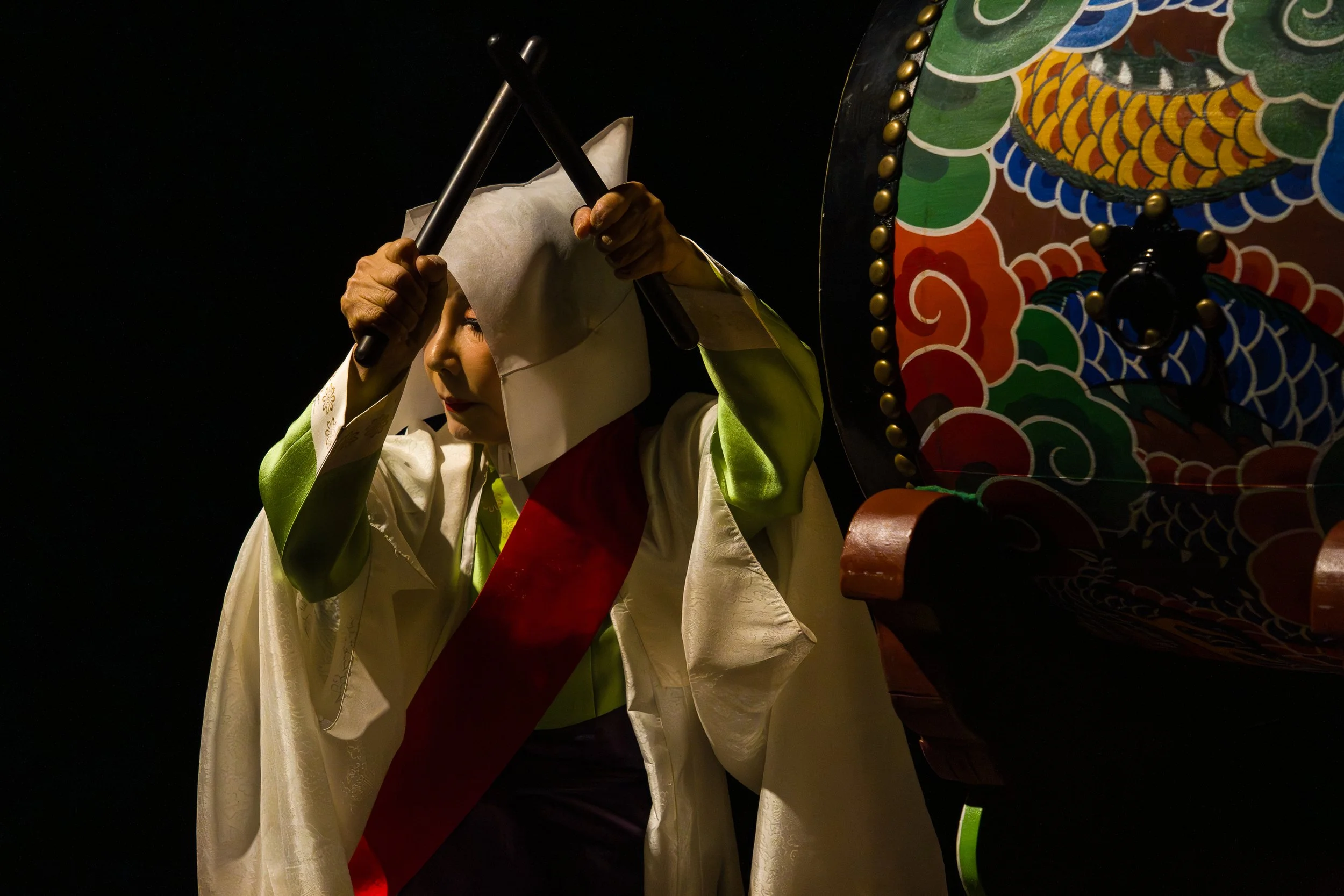
From Seungmu | Dancer: Geesook Baek
승무 | 백지숙
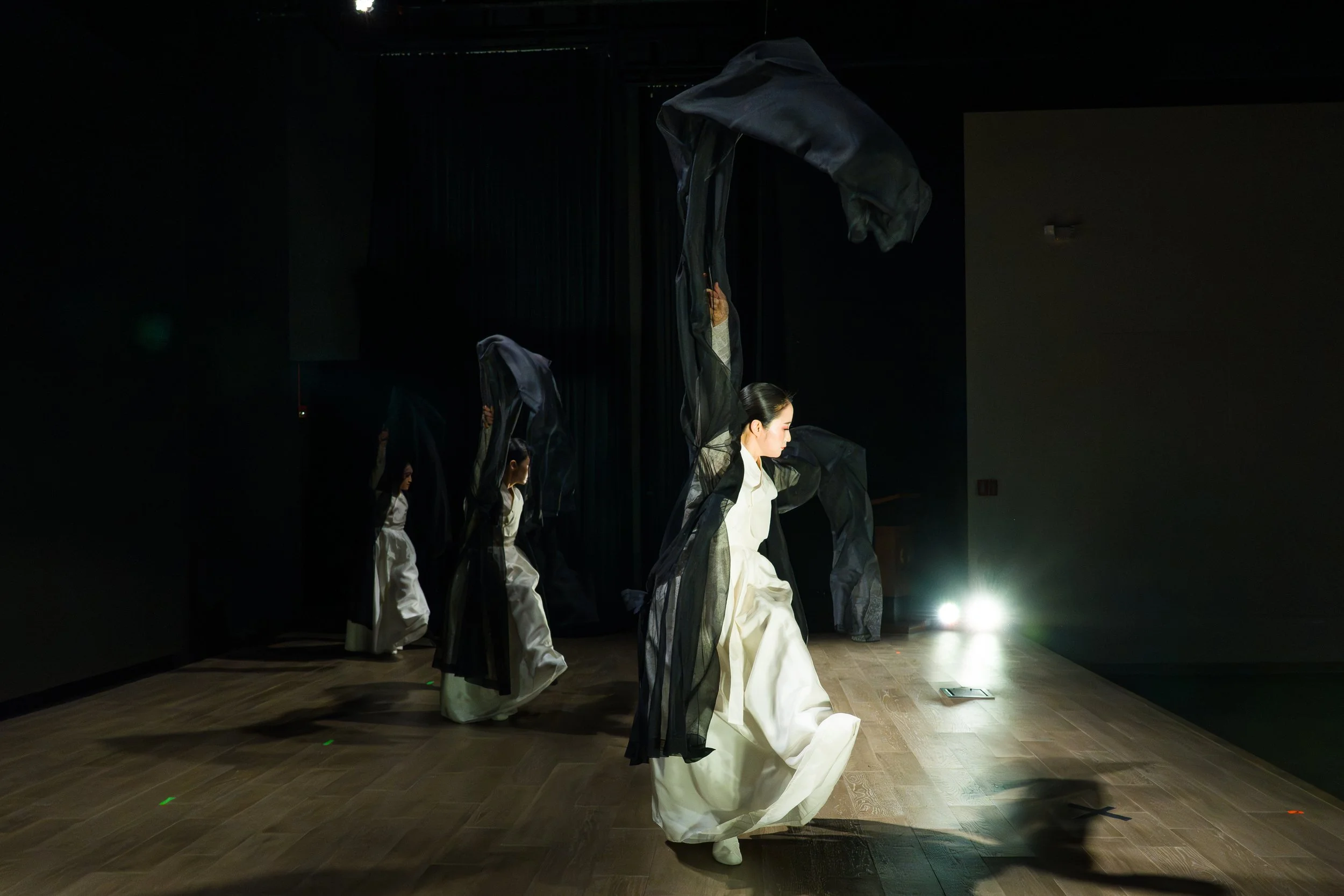
From Arirang Love Song | Dancer: (From left to right) Juyeun Chae, Yujin Kim, Jiyoung Park
아리랑 연가 | 채주연, 김유진, 박지영
Conclusion
Through “Dancing Across Time,” Chicago Korean Dance convincingly demonstrated that tradition is not merely a relic of the past, but a living foundation that continues to breathe in the present.
By pairing tradition with contemporary creation, the performance presented a cohesive narrative—where tradition serves as the root, and creation as the branch that grows from it.
시카고코리안댄스는 비스코홀 공연 ‘춤, 시간을 건너다’를 통해 전통이 과거에 머무는 유산이 아니라, 오늘을 살아 숨 쉬게 하는 뿌리임을 설득력 있게 보여주었다.
이어 그 뿌리에서 자라난 창작이 곧 오늘의 가지라는 메시지를, 전통과 창작이 짝을 이룬 각 무대를 통해 유기적으로 풀어내며 완성도 높은 서사를 구축했다.
Photos & Article by Wonjung Park
Chicago Korean Dance